PBLEmulator: The Complete Guide to Setup, Mods, Tips & Updates by PlugboxLinux (2026)
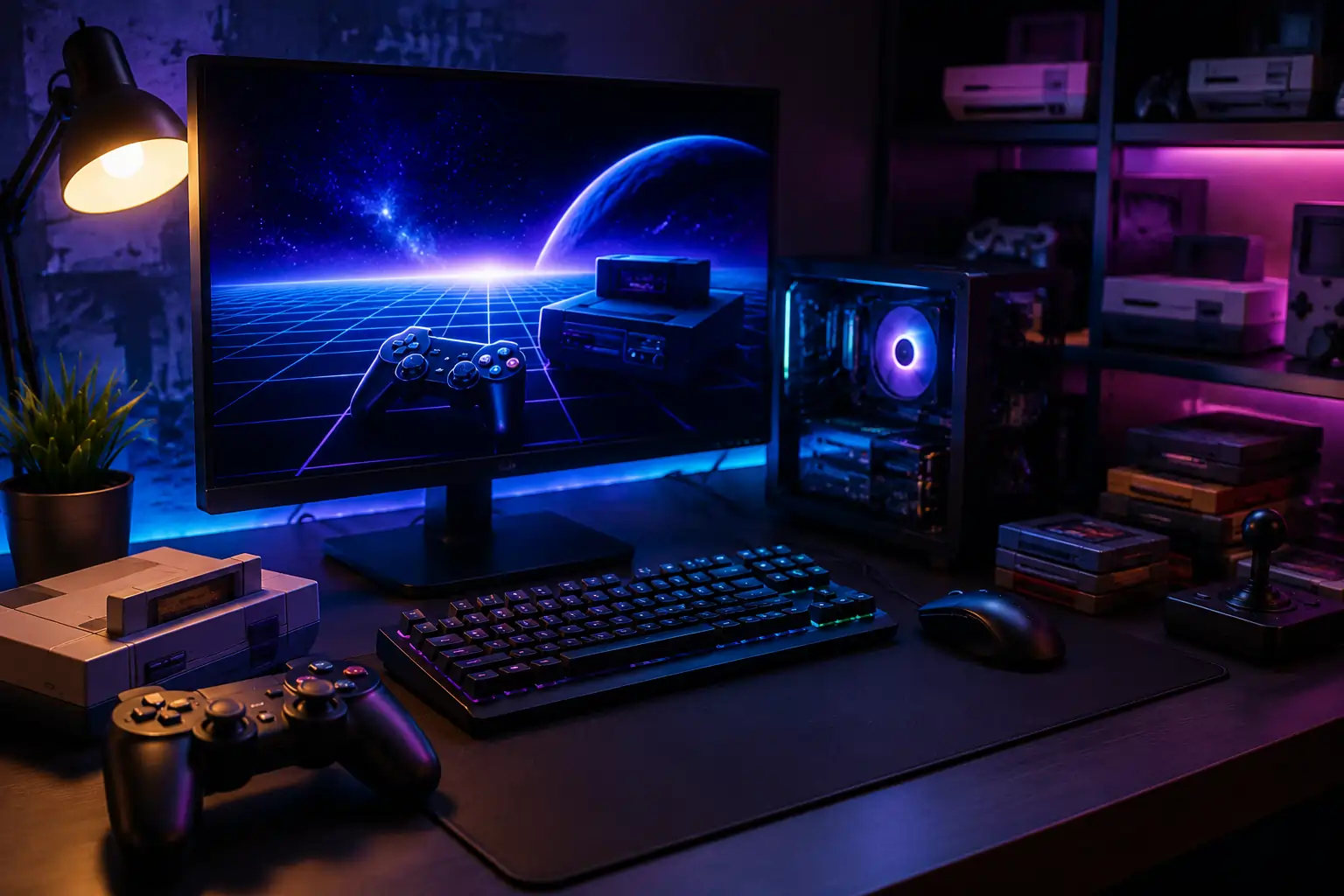
Have you ever wanted to play classic games on your computer without buying old hardware? That dream is now a reality, and pblemulator is one of the most exciting tools making it happen. Whether you’re a beginner trying to figure out how to install pblemulator, or a pro chasing the best mods and upgrades, this guide covers everything. We’ll walk through setup, tips, tricks, updates, and much more — all in plain, friendly language anyone can understand.
What Is PBLEmulator?
PBLEmulator is a flexible, open-source emulation platform built to run games and software from older consoles and systems on modern hardware. Think of it as a time machine for your computer. When you start it up and load a game, you’re back in the golden age of gaming without having to use an old console.
What makes pblemulator stand apart from regular emulators? It’s the design philosophy. The team behind it, especially PlugboxLinux, built it to be fast, transparent, and modular. Most commercial emulators hide settings behind menus and bloated interfaces. PBLEmulator keeps things clean and scriptable. You’re always in control. You can swap cores and adjust the settings, and you can see exactly what the tool is doing in the background. This approach is especially loved by tech-savvy users, retro game fans, and DIY builders who hate black-box software that just “does stuff” without explaining itself.
Even if you’re brand new, don’t worry. In 2026, the community has made it surprisingly simple to get started with pblemulator.
How to Set Up PBLEmulator
The very first thing you need is a clean system. Before you begin the set up for pblemulator, take a moment to organize your files. Create a dedicated folder for everything — BIOS files, ROM files, and config files. This tiny step saves hours of headaches later.
Before installing pblemulator, follow these straightforward steps to get started:
- A modern PC or laptop (strong single-core CPU performance helps most)
- At least 4GB RAM (8GB or more is better)
- A dedicated GPU if you’re emulating demanding 3D titles
- An SSD for faster load times (this tip is often overlooked but makes a big difference)
- A clean Linux distro (PlugboxLinux is the recommended choice) or a Windows machine
Once your system is ready, head to the official repository and avoid third-party download sites completely. Shady sources often bundle outdated files or harmful extras. Always download and install pblemulator from a reliable and verified source. After downloading, open your terminal and follow these basic steps:
git clone [Official-PBLEmulator-Repo]
cd pblemulator
chmod +x setup.sh
./setup.sh
The system handles dependencies automatically after the setup script has been run. Then launch the emulator, and you’ll see the main settings screen. Configure your graphics, audio, and control settings before loading any game. This first-time configuration is important — don’t rush past it.
How to Install PBLEmulator Without Common Mistakes
Installing software always carries some risk of going wrong, especially when dependencies are involved. The biggest mistake new users make when they install pblemulator is skipping the dependency check. If your system is missing required libraries for graphics rendering or audio support, the emulator won’t run correctly — and the error messages can be confusing.
The correct way to do it is as follows: First, always choose a clean installation environment. PlugboxLinux is designed to work seamlessly with pblemulator, and doing your install on a fresh PlugboxLinux build avoids conflicts with older software versions. If you’re using Ubuntu, Fedora, or Arch Linux, each of these distros has a package manager that can help you grab the right dependencies before you even run the installer.
A few practical rules to follow:
- Don’t use third-party installers. They often include outdated builds.
- Check your GPU drivers before starting. Updated drivers prevent rendering failures.
- Run the setup script as the correct user. Avoid running as root unless the docs specifically say to.
- Keep a copy of the old version saved somewhere. If the new build has issues, you can roll back quickly.
One underrated tip: if you’re running pblemulator on an older machine or a Raspberry Pi, choose the lightest build available. Heavier builds waste resources your hardware doesn’t have.
How to Set Up PBLEmulator for Best Performance
Getting pblemulator installed is just step one. The real magic happens when you properly configure it. Think of the default settings as a “good enough” starting point — but with the right tweaks, you can push performance noticeably higher.
Start with your graphics backend. For modern GPUs, Vulkan rendering is the top choice. It delivers faster performance and better GPU offloading. If your card doesn’t support Vulkan well, OpenGL is a solid fallback. Avoid mixing backends without knowing why — this causes rendering glitches that look confusing but are easy to fix once you understand the cause.
Next, tackle your audio settings. Audio desync is one of the most common complaints from new users. Setting the correct audio buffer size eliminates most of these problems. If you hear crackling or delay in sound, reduce the buffer slightly and test again.
For controls, spend 10 minutes mapping your gamepad properly during first setup. Sloppy control mapping makes even great games feel unplayable. PBLEmulator’s script-based control system lets you customize everything, which is a genuine advantage over simpler emulators.
Finally, organize your ROM library cleanly. Use subdirectories for each console. Proper directory mapping means pblemulator finds your files instantly without manual browsing every time.
Best Tips and Tricks for PBLEmulator from PlugboxLinux
The most experienced pblemulator users share a set of habits that separate smooth setups from frustrating ones. Here are the top tips pblemulator fans swear by — specifically the ones that come from the PlugboxLinux community’s collective wisdom.
Tip 1: Use Version Control for Your Config Files The PlugboxLinux approach to pblemulator treats config files like code. Back them up using Git. If an update breaks something, rolling back to a working config takes seconds, not hours.
Tip 2: Stay Lean Don’t install every plugin and mod at once. Start minimal. Add one thing at a time and test after each addition. This way, when something breaks, you know exactly what caused it.
Tip 3: Use Shell Scripts for Repetitive Tasks One of pblemulator’s core strengths is its shell-based design. If you find yourself doing the same multi-step task repeatedly — like loading a specific game with a specific core and controller profile — write a small script to do it in one command. This is classic PlugboxLinux thinking: automate the boring parts.
Tip 4: Check Logs Regularly PBLEmulator logs are surprisingly readable. When something goes wrong, the log file usually tells you exactly why. Most users skip log-reading and end up frustrated. The tips and tricks pblemulator community on PlugboxLinux forums always asks for log output first when someone reports a bug — for good reason.
Tip 5: Run on SSD This keeps coming up because it matters so much. Load times on SSD versus HDD for heavier emulation tasks can differ by several seconds per game launch. Over a long gaming session, that adds up.
Tip 6: Match Your Core to Your Game PBLEmulator is modular, meaning you can swap emulation cores. Some cores are optimized for specific game libraries. Don’t use a general-purpose core when a specialized one exists for that console. The performance difference is real.
PBLEmulator Mods: How to Transform Your Experience
Mods are where pblemulator truly starts to shine beyond basic emulation. PBLEmulator mods are custom modifications — made by passionate community developers — that upgrade how the emulator looks, performs, and behaves. They’re not official software updates, but they often outperform stock features in both flexibility and power.
The types of pblemulator mods available in 2026 include:
- Shader Packs — Add CRT scanlines, glow effects, and accurate color reproduction that makes retro games look exactly like they did on original hardware (or even better).
- Texture Replacement Packs — Swap pixelated original textures for high-definition alternatives. Some community packs look genuinely stunning.
- Performance Tweaks — Mods that adjust RAM allocation, CPU threading, and GPU rendering paths for faster, smoother gameplay.
- Audio Enhancement Mods — Better resampling algorithms and noise reduction for cleaner sound.
- Cheat Engine Hooks — Useful for developers and testers who need real-time memory access.
- Rewind Support — Roll back gameplay in real time, perfect for practicing tricky sections.
- Debug Tools — For developers and advanced users who want to inspect what’s happening under the hood.
The key rule with pblemulator mods is always downloading from verified community sources. Random forums carry risk. Stick to trusted mod repositories and always scan files before running them. When you apply a mod, test it in isolation first before stacking multiple mods together.
PBLEmulator Upgrades: What’s New and What’s Worth It
Beyond community mods, there are official and semi-official pblemulator upgrades that significantly improve the platform’s core capabilities. These differ from mods in that they extend what the emulator itself can do — not just how a specific game looks or runs.
Notable upgrades available as of 2026 include:
- BIOS Switchers — Toggle between regional BIOS versions to handle region-locked content without manual file swaps.
- Auto-Save State Refresh — A more reliable save system that’s far less prone to corruption than older methods.
- Broadened Hardware Support — Expanded compatibility with mini PCs, aging laptops, and Raspberry Pi setups. Legacy hardware support is essential for the retro community.
- Improved ROM Set Compatibility — Cleaner BIOS handling and broader support for international ROM sets that previously required third-party patches.
- Texture Upscaling Support — Expected in upcoming builds, this is great for early 3D games that originally looked rough around the edges.
- EmulationStation Integration — Planned improvements to connect pblemulator’s backend with frontend dashboards like EmulationStation, allowing seamless multi-console browsing.
Installing pblemulator upgrades is usually straightforward. For most updates, it’s a simple pull from the main repo and rebuild. For bleeding-edge features, building from source is sometimes needed — but the PlugboxLinux documentation covers this clearly. Always back up your save states and config files before any major upgrade.
PBLEmulator Updates by PlugboxLinux
The pblemulator updates by PlugboxLinux have been genuinely impressive in the past year. The team has focused on three main priorities: stability, compatibility, and reducing the learning curve without dumbing things down.
Recent updates have addressed several pain points that longtime users complained about:
Faster Load Times — The latest builds shed unnecessary driver overhead. The system now auto-selects only what your hardware actually needs, leading to smaller installs and quicker boots.
Better Rendering — Improved frame pacing and shader compilation in recent pblemulator updates have made games noticeably smoother, especially during scene transitions that used to cause micro-stutters.
Smarter Dependency Management — Gone are the days of tangled library conflicts. The updated installer identifies conflicts early and resolves them cleanly.
Broader ROM Format Support — The latest pblemulator updates by PlugboxLinux added support for additional international ROM formats, cutting out the need for conversion scripts that used to be required.
Community Feedback Loop — This is perhaps the most underrated improvement. The PlugboxLinux team actively tracks how real users interact with real hardware. That feedback directly shapes each release cycle, which is why recent updates feel targeted at actual problems rather than theoretical ones.
The PlugboxLinux roadmap openly targets stability first, with texture upscaling and EmulationStation integration teased as high-priority upcoming additions. Nothing fully official yet, but the developer channels are active and enthusiastic.
How to Update PBLEmulator: Step-by-Step
Knowing how to update pblemulator correctly matters more than most people think. A bad update process can wipe your save states, break your controller mapping, or reset your carefully tuned configuration. Here’s the safe way to do it every time.
Step 1: Back Up Everything First Before touching anything, copy your save states, your memory card backup files, and your configuration .ini file to a safe folder. This takes two minutes and protects hours of progress.
Step 2: Check the Changelog Read the release notes for the new version. Sometimes an update requires a post-install step — like clearing a shader cache or re-mapping a specific setting. Knowing this before you update saves confusion later.
Step 3: Pull the Latest Build If you installed via Git (the recommended method), updating is simple:
cd pblemulator
git pull
./setup.sh
Run the most recent stable release from the official source if you downloaded a standalone installer. Avoid “nightly builds” unless you specifically want experimental features and accept the higher chance of instability.
Step 4: Relaunch pblemulator and check the version number in the “About” or “Settings” sections after the update is finished. Confirm it matches the release you intended to install.
Step 5: Test Your Common Games Before diving into a long session, run a quick test with two or three of your most-used titles. Confirm audio, video, and controls all work as expected. If you spot something broken, the update changelog usually points to why.
Troubleshooting Common Update Issues:
- Missing plugins after update → Re-enable or re-download them manually
- Broken ROM/BIOS paths → Check that your directory settings haven’t reset
- Crash on launch → Try compatibility mode or do a clean reinstall
PBLEmulator Release Date: History and What’s Coming
The release date pblemulator timeline is a bit unusual compared to commercial software. There’s no corporate press release, no countdown clock, and no launch event. PBLEmulator grew the way the best open-source tools often do — through a community whisper network, shared builds in developer channels, and passionate people iterating quietly until something worked really well.
Early builds focused on basic multi-platform support. Subsequent releases gradually improved rendering, audio accuracy, and input latency. The project gained serious momentum when PlugboxLinux integrated it into their ecosystem, bringing structured documentation and a feedback-driven release process.
Currently, the release cadence follows a stability-first philosophy. Major stable releases come after extensive testing. In between, smaller patch releases address specific bugs reported by the community. The dev channels regularly hint at upcoming features — texture upscaling and EmulationStation integration being the two most-discussed targets for future stable releases.
If you’re watching for the next pblemulator release, the best approach is to follow the official GitHub repository and the PlugboxLinux developer forums. That’s where real-time progress gets posted before anything shows up elsewhere.
PBLEmulator System Requirements and Hardware Tips
Understanding what hardware you need makes a real difference in your experience. PBLEmulator is intentionally lightweight — that’s a core PlugboxLinux design value — but some types of emulation are naturally more demanding than others.
Minimum for basic retro emulation:
- Dual-core CPU with decent single-core performance
- 4GB RAM
- Integrated graphics (for 2D and early 3D titles)
- Standard HDD (though SSD is strongly recommended)
Recommended for demanding 3D emulation:
- Quad-core CPU, modern architecture
- 8GB RAM or more
- Dedicated GPU with Vulkan support
- SSD (essentially mandatory for smooth experience)
For Raspberry Pi and mini-PC users: The most recent pblemulator updates by PlugboxLinux have specifically improved support for these devices. Choose the lightweight build, keep your ROM library organized on fast storage, and use the shell-based launcher scripts to minimize overhead. The emulator runs surprisingly well even on limited hardware when configured properly.
One hardware tip the community consistently emphasizes: keep your GPU drivers updated. Outdated drivers are responsible for a disproportionate number of rendering glitches and random crashes. This is especially true if you’re using any shader mods.
Building a Community-Backed PBLEmulator Setup
One of the most genuinely exciting things about pblemulator is the community around it. This isn’t passive software with a contact form. PlugboxLinux actively encourages contributions, and some of the best improvements to the platform have come directly from users who shared their custom launchers, shader hacks, cheat engine hooks, and config templates.
If you’re setting up pblemulator for the first time, you’re not doing it alone. The community has already solved most of the common problems you’ll encounter. Forums, Discord channels, and the GitHub repository are full of real-world solutions from people running hardware just like yours.
A few ways to get involved and benefit from the community:
- Follow the GitHub repository for real-time updates and issue tracking
- Join PlugboxLinux forums where experienced users share advanced configurations
- Submit your own scripts if you develop something useful — open-source thrives on contribution
- Report bugs clearly with log output — the dev team responds faster when reports are specific
The community feedback loop is genuinely what has made the recent pblemulator updates by PlugboxLinux so targeted and useful. Real problems get fixed because real users report them clearly.
Frequently Asked Questions
1. Is PBLEmulator safe to use in 2026?
Yes — when you download pblemulator from its official, verified source and follow the standard installation process, it’s safe. Always avoid third-party download sites, and scan any community mods before installing them. The PlugboxLinux project is transparent about what the software does, so you’re never dealing with hidden behavior.
2. Can I run PBLEmulator on Windows, or is it Linux-only?
PBLEmulator has its strongest integration with PlugboxLinux and Linux-based systems generally. However, it can run on Windows with some configuration. The modding scene is actually more active on Windows-based builds because of the flexibility Windows offers for shader and texture mods. Mac users face more limitations and may need a virtual environment.
3. What’s the difference between pblemulator mods and official upgrades?
Mods are community-created additions that change how the emulator looks or performs — think shader packs, texture replacements, and custom launchers. Official upgrades are improvements to pblemulator’s core functionality released through the main repository. Both are valuable, but upgrades go through more testing and are generally safer to apply.
4. How frequently do PlugboxLinux update the pblemulator?
The release cadence is driven by stability testing rather than a fixed schedule. Patch updates for particular bugs are frequently released. Major stable releases come after thorough community testing. Following the GitHub repository and PlugboxLinux developer forums gives you the earliest reliable information on new releases.
5. My game runs slowly after setup. What should I try first?
Check your graphics backend first; if your GPU supports it, switch to Vulkan. Update your GPU drivers next. After that, check to see if the core you’re using is optimized for that particular console as opposed to a generic core. Finally, if you’re on HDD storage, consider moving your ROM files to an SSD. These four steps resolve the majority of complaints about performance.
6. Can I use PBLEmulator on a Raspberry Pi or old laptop?
Absolutely — and this is one of pblemulator’s real strengths. The PlugboxLinux team has specifically improved legacy hardware support in recent updates. Use the lightweight build, organize your game files on fast storage, and use the shell-based scripts to reduce unnecessary resource overhead. Many users successfully run great setups on Raspberry Pi 4 devices and decade-old laptops.
Conclusion
Whether you want to relive childhood memories, explore gaming history, or just tinker with an impressive open-source tool, pblemulator gives you a powerful platform to work with. The combination of PlugboxLinux’s clean, scriptable design philosophy and an active, generous community makes this one of the most rewarding emulation setups available in 2026.
Start simple. Set up pblemulator on a clean system, configure your basics properly, and get comfortable before adding mods or upgrades. Once you feel at home, the community’s tips, tricks, and creative contributions open up a whole new level of customization.