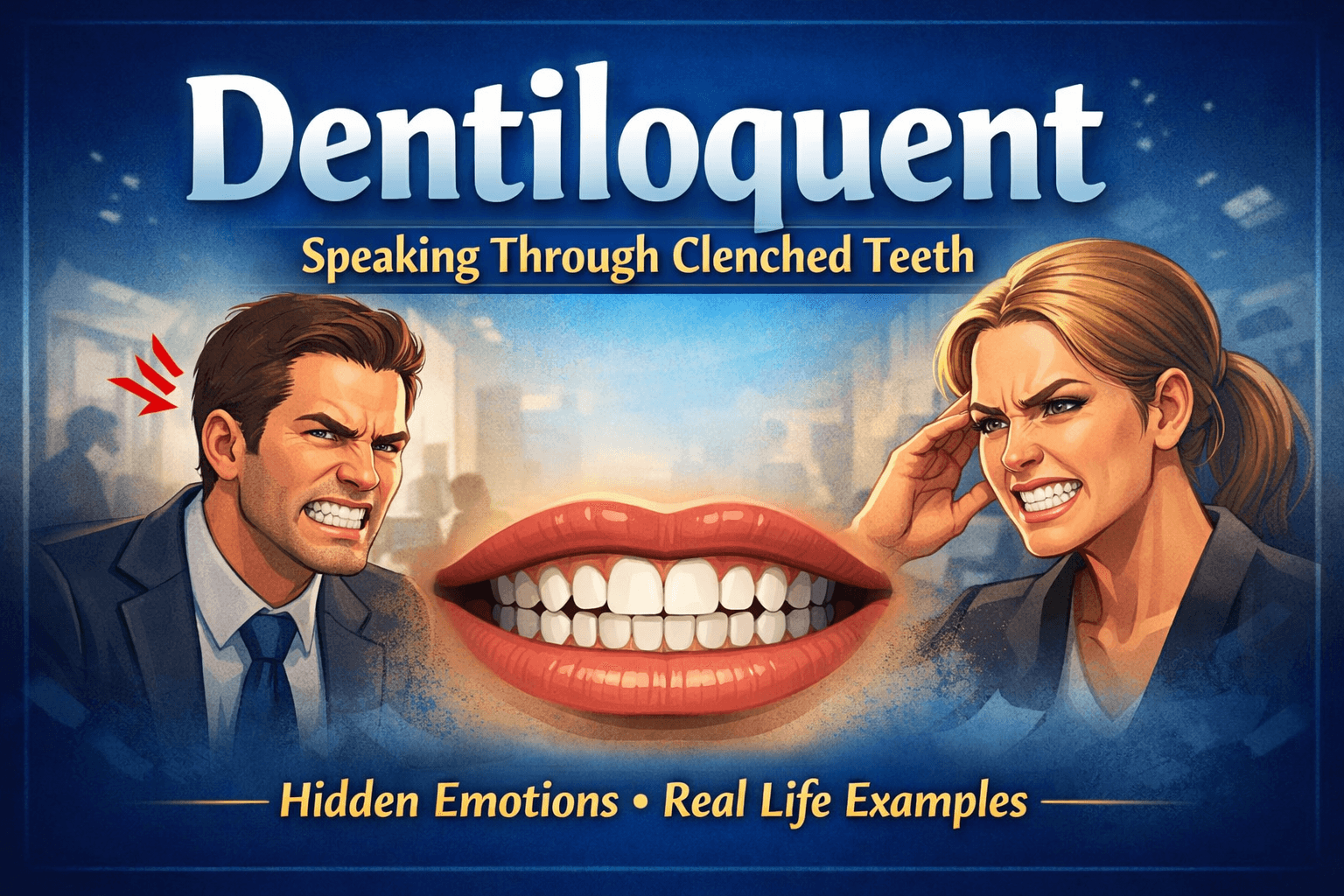
Language is full of interesting words, and dentiloquent is one that many people have never heard before. It describes a very specific way of speaking that most of us have seen in real life. Think about a moment when someone talks through their teeth because they are upset but trying to stay calm. That is exactly what this word explains. Learning terms like dentiloquent can help you understand emotions better and describe situations more clearly. It also adds a unique touch to your vocabulary. Even though it is not common in everyday speech, it carries strong meaning and helps express feelings in a subtle but powerful way.
What Does Dentiloquent Mean?
The word dentiloquent refers to speaking through clenched teeth. It comes from Latin roots, where “denti” relates to teeth and “loquent” relates to speaking. When a person talks this way, their voice often sounds tight or controlled.
This type of speech usually appears when someone is trying to hide anger or frustration. Instead of shouting, they keep their voice low but tense. That small change in tone can say a lot. Understanding this meaning helps you notice emotional signals that are easy to miss in normal conversation.
Why This Word Stands Out
This term is special because it describes both sound and emotion together. Many words explain how people speak, but very few show the physical tension behind it. That is what makes it unique.
When someone speaks with a tight jaw, you can sense pressure in their voice. It feels different from relaxed speech. Writers often use such words to make scenes feel real. It helps readers picture the moment clearly without long explanations.
Real-Life Situations Where It Happens
You may notice this speaking style in daily life more often than you think. For example, during a stressful meeting, someone might talk calmly but with tension in their jaw. A parent might also use this tone when they are upset but trying to stay composed.
These moments show how people manage their emotions. The words may sound polite, but the tone reveals the truth. Recognizing this behavior helps you better understand others and respond wisely in difficult situations.
Use in Writing and Storytelling
In writing, this type of speech helps create strong emotional scenes. Instead of saying a character is angry, a writer can show it through their tone. This makes the story more engaging.
For example, a character might give a warning in a tight voice without raising it. That small detail can change the whole mood of a scene. It allows readers to feel tension without direct explanation, which improves the overall experience.
Emotional Signals Behind This Speech
Speaking through clenched teeth often shows hidden feelings. It can point to anger, stress, or even discomfort. The key idea is control. The speaker is trying to manage emotions instead of showing them openly.
This makes communication more complex. The words alone do not tell the full story. You need to notice tone, facial expression, and body language. Understanding these signals can improve both personal and professional interactions.
Simple Everyday Examples
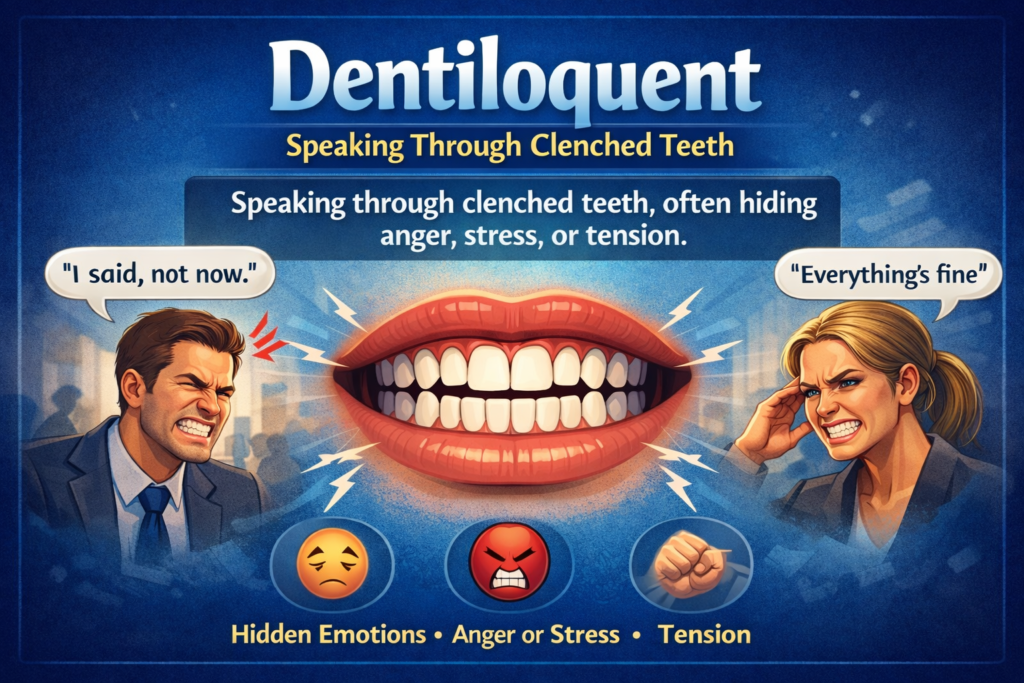
Imagine a person saying “That’s fine” but with a tight smile and stiff jaw. Or a teacher warning a student while trying to stay calm. These are clear examples of this speech pattern.
In each case, the message sounds normal, but the tone tells something deeper. This is why learning about dentiloquent behavior is useful. It helps you see what is really happening beneath the surface.
Difference Between Relaxed and Tense Speech
Normal speech feels smooth and natural. The jaw is relaxed, and words flow easily. In contrast, tense speech feels tight and controlled.
This difference affects how listeners react. Relaxed speech feels friendly and open, while tense speech can feel uncomfortable. Once you notice this contrast, it becomes easier to understand people’s emotions in conversations.
When Should You Use This Word?
You can use dentiloquent in writing when you want to describe hidden tension. It works well in stories, character descriptions, and emotional scenes.
However, it should be used carefully. Since it is not a common word, too much use can feel unnatural. Use it only when it adds clear meaning. This keeps your writing simple and effective.
Benefits of Expanding Vocabulary
Learning rare words helps you express ideas more clearly. It allows you to describe situations with precision instead of using vague language.
It also improves your writing style. A strong vocabulary makes your content more engaging and interesting. Over time, this builds confidence in both speaking and writing skills.
Common Mistakes to Avoid
One mistake is using this word in the wrong context. It should only describe speech with a tight jaw. Using it for normal talking would be incorrect.
Another mistake is overuse. Rare words should be used in balance. Focus on clarity first. When used correctly, they add value instead of confusion.
How It Improves Communication
Understanding this speaking style helps you read emotions better. You can notice when someone feels stressed or uncomfortable, even if they do not say it directly.
This awareness can improve relationships. It helps you respond with care and avoid misunderstandings. Small details like tone often matter more than words.
FAQs
1. What does dentiloquent mean?
It means speaking through clenched teeth, often showing hidden tension or emotion.
2. Is this word commonly used?
No, it is rare, but useful for describing a specific speaking style.
3. When do people speak this way?
Usually, when they feel angry, stressed, or are trying to stay calm.
4. Can it be used in writing?
Yes, especially in stories to show emotion instead of telling it.
5. Is it always negative?
Not always, but it often suggests discomfort or tension.
6. How can I remember it?
Think of “denti” as teeth and “loquent” as speaking.
Conclusion
Dentiloquent is a simple yet powerful word that captures a very specific human behavior. It helps describe moments when people speak with hidden emotion and controlled tension. Even though it is not widely used, it can add depth to both writing and communication.
By understanding this word, you become more aware of how people express feelings beyond words. This makes conversations clearer and more meaningful. Keep exploring words like this, and your ability to express ideas will continue to grow naturally.
READ MORE: Use Zealpozold Daily: Your Complete Guide to Natural Wellness
About the Author